
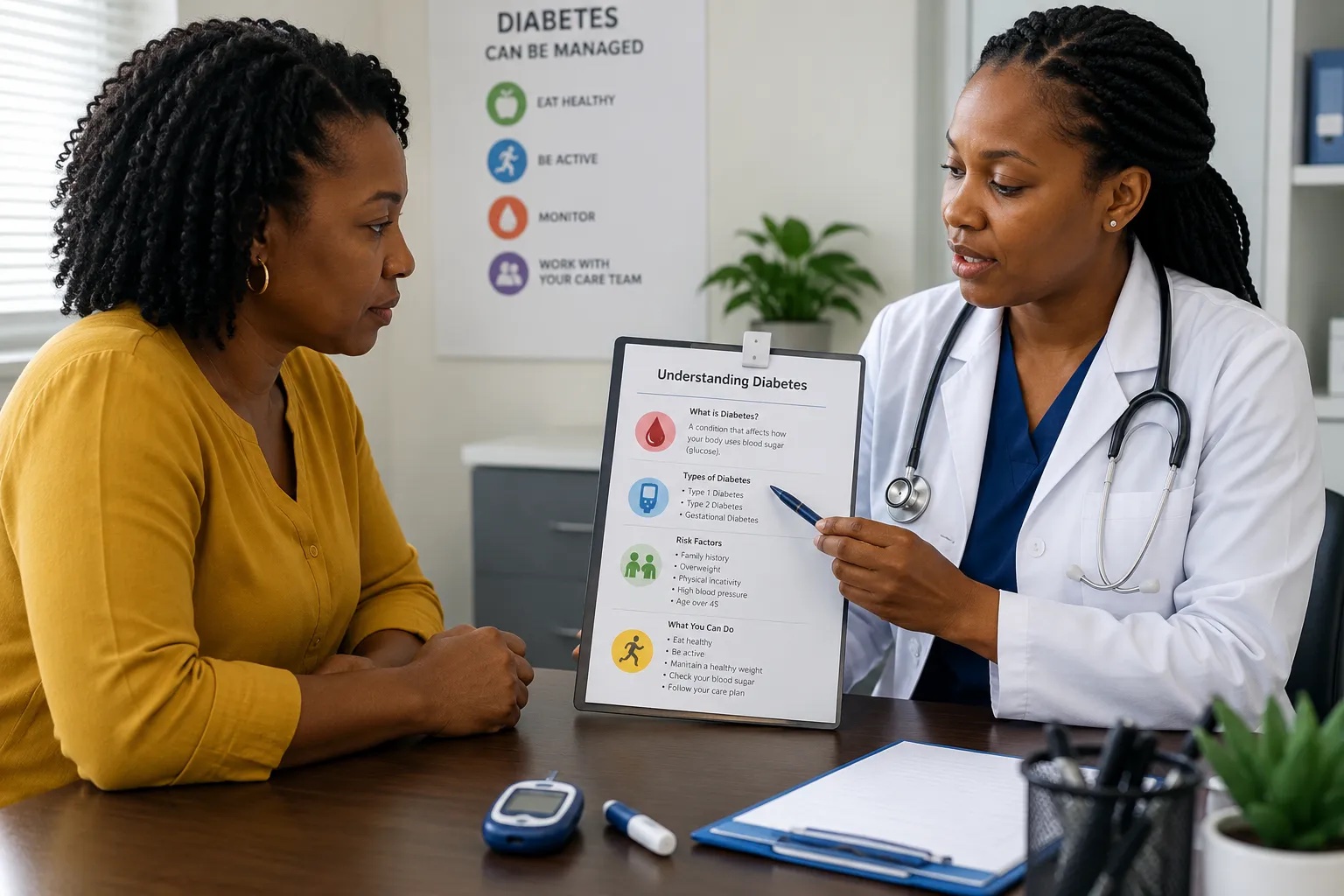
Diabetes can develop quietly. A person may feel well while high blood sugar gradually damages the heart, kidneys, eyes, nerves, and blood vessels.
That is why understanding diabetes—and getting tested when you are at risk—can protect your health and possibly save your life.
What Is Diabetes?
Diabetes is a long-term condition in which the level of glucose, or sugar, in the blood becomes too high.
Glucose provides energy for the body. A hormone called insulin helps move glucose from the bloodstream into the cells, where it can be used. Diabetes develops when the body does not produce enough insulin, cannot use insulin properly, or both.
The main types are:
What Causes Diabetes?
Diabetes does not have one single cause.
Type 1 diabetes is believed to result from a combination of genetic and environmental factors that trigger an immune reaction.
Type 2 diabetes is influenced by several factors, including family history, age, body weight, physical inactivity and how effectively the body uses insulin. It should not be treated as a personal failure. Some risk factors can be changed, while others cannot.
Frequently eating highly processed foods or sugary drinks may contribute to weight gain and increase the risk of type 2 diabetes, but sugar alone is not the entire explanation.
Who Is at Greater Risk?
You may have a higher risk of type 2 diabetes if you:
- Have a parent, brother or sister with diabetes
- Have overweight or obesity
- Are not regularly physically active
- Have high blood pressure
- Have previously been told you have prediabetes
- Had diabetes during pregnancy
- Are getting older
- Have a history of heart disease or certain other health conditions
People of African, Asian, Hispanic, Indigenous and Pacific Islander backgrounds may also have a higher risk of developing type 2 diabetes.
Warning Signs to Know
Possible symptoms of diabetes include:
- Urinating more frequently
- Feeling unusually thirsty or hungry
- Unexplained weight loss
- Constant tiredness
- Blurred vision
- Numbness or tingling in the hands or feet
- Wounds that heal slowly
- Frequent urinary or yeast infections
However, many people with type 2 diabetes have few symptoms—or none at all. A person should not wait until they feel sick before checking their blood sugar.
What Should You Do Next?
The Message Every Family Should Remember
Diabetes is serious, but it can be prevented in some cases and effectively managed in others.
Know your risk. Recognize the warning signs. Get tested. And when diabetes is diagnosed, begin proper care early.
Do not wait for complications to reveal a condition that a simple blood test could have found sooner.