HEALTH EDUCATION · JUL 2026
Hands-Only CPR: A Simple Skill That Could Save Someone You Love
Sir Lawrence Omerennah Health Foundation
Imagine you’re at home with your family when someone suddenly collapses. They’re not responding. They’re not breathing normally. Everyone freezes.
Would you know what to do?
For many families, the answer is no. Yet those first few minutes can mean the difference between life and death.
At the Sir Lawrence Omerennah Health Foundation, we believe that lifesaving knowledge should not be limited to doctors and nurses. Every parent, student, teacher, neighbor, and community member should know the basics of Hands-Only CPR.
What Is Hands-Only CPR?
Hands-Only CPR is an emergency technique used when a person’s heart suddenly stops beating, a condition known as cardiac arrest.
Unlike traditional CPR, Hands-Only CPR does not involve rescue breaths. Instead, you perform continuous chest compressions to keep blood flowing to the brain and other vital organs until professional help arrives.
Research has shown that when a bystander starts CPR immediately, it can significantly improve a person’s chances of survival.
When Should You Use It?
Hands-Only CPR should be used if someone:
- Suddenly collapses.
- Is unresponsive.
- Is not breathing normally or is only gasping.
If you’re unsure whether CPR is needed, it’s generally better to begin CPR than to do nothing while waiting for help.
The Five Simple Steps
1
Make Sure the Area Is Safe
Before approaching the person, quickly look around for dangers such as traffic, fire, electricity, or anything else that could put you at risk. You cannot safely help someone if you become another victim.
2
Check for a Response
Tap the person’s shoulders firmly and ask loudly: “Are you okay?” If there is no response, treat it as an emergency.
3
Call for Help
Call your local emergency services immediately. If other people are nearby, point to one specific person and say: “You—call emergency services.” If an Automated External Defibrillator (AED) is available, ask someone to bring it.
4
Check for Normal Breathing
Look for normal chest movement. If the person is not breathing normally or is only gasping, begin CPR immediately. Do not spend valuable time checking for a pulse unless you have been trained to do so.
5
Push Hard and Fast
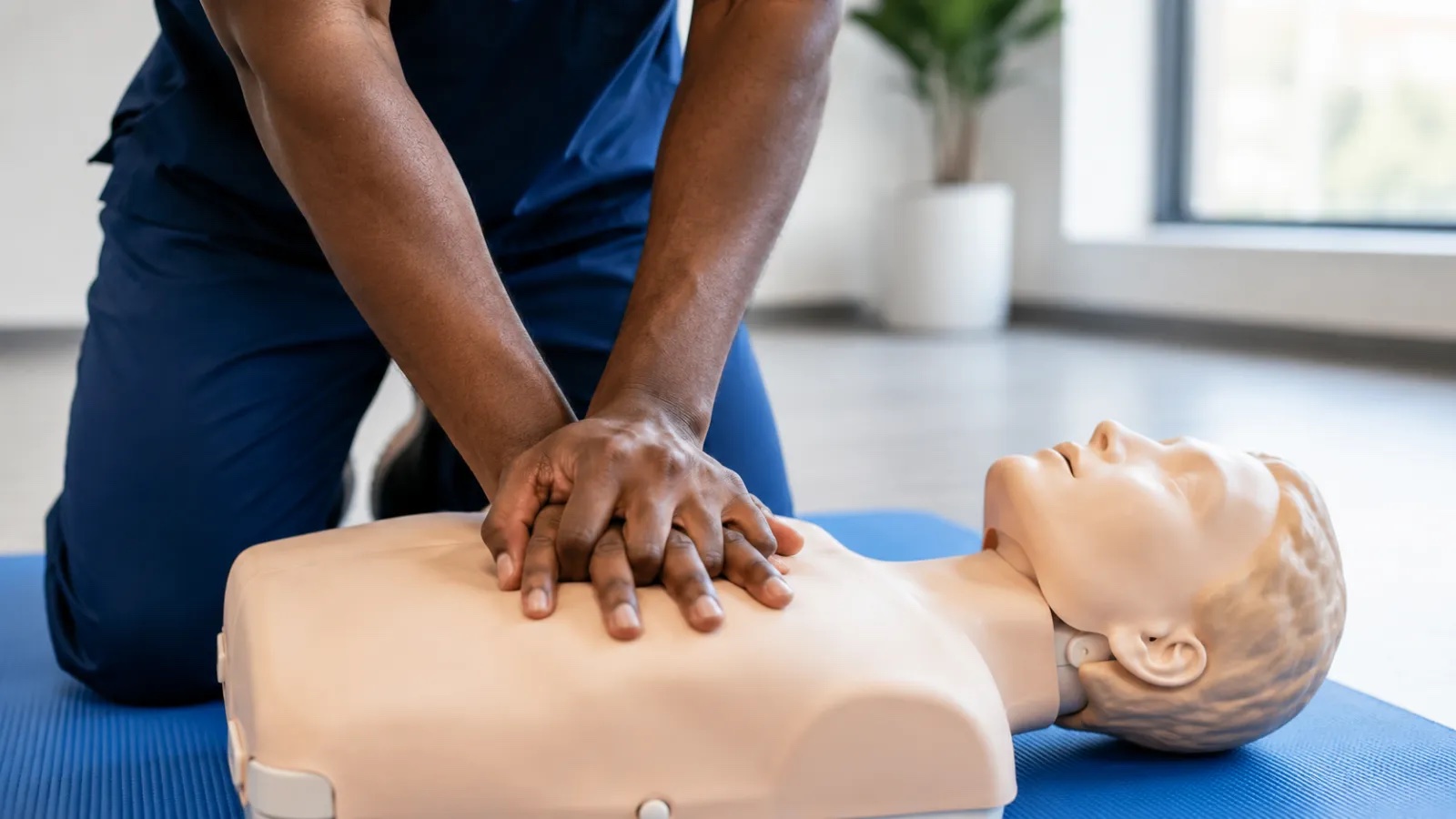
Place the heel of one hand in the center of the chest and your other hand on top. Keep your arms straight and your shoulders directly over your hands. Push hard and fast — about 2 inches (5–6 cm) deep, at a rate of 100–120 compressions per minute. Allow the chest to rise completely after each compression and continue until emergency responders arrive, an AED is ready to use, the person begins breathing normally, or you are physically unable to continue.
Why This Matters in Our Communities
In many parts of Africa, emergency medical services may take time to arrive or may not be readily available. Even in countries with well-developed emergency systems, the first person at the scene is usually not a healthcare professional—it is a family member, friend, coworker, or passerby.
That means ordinary people have the power to save lives.
Learning Hands-Only CPR is not about replacing healthcare professionals. It is about giving someone the best possible chance of surviving until trained medical help arrives.
REMEMBER THESE THREE WORDS
Recognize when someone is unresponsive and not breathing normally. Call for emergency help. Push hard and fast in the center of the chest.